A Tribute to Aristide Massaccesi (Joe D’Amato)
- byLorenzo Ricciardi
- 1 month ago
- 0 Comment
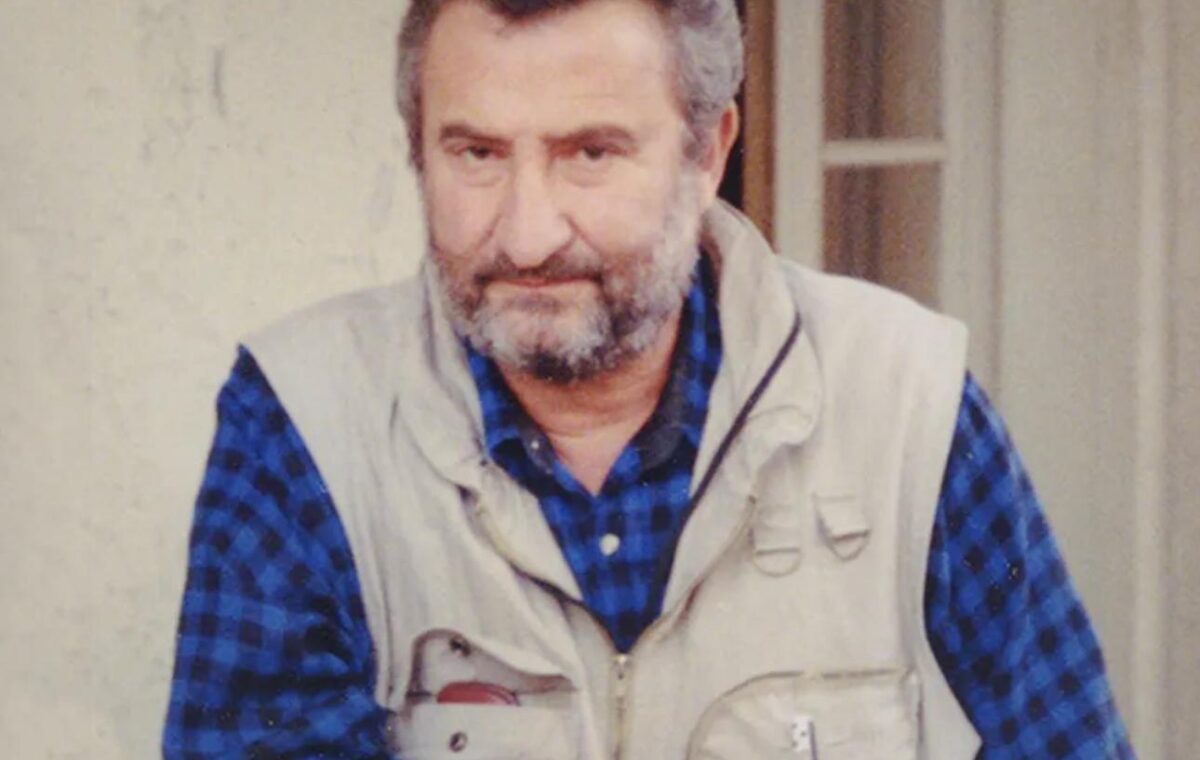
““What we’ve always tried to do is give the audience what the audience wanted. With passion and enthusiasm. And without a shred of hypocrisy”
Aristide Massaccesi
Several years have passed since the untimely and sudden passing of Aristide Massaccesi, known to everyone as Joe D’Amato, but the memories of a generous, likable, and helpful man—as well as a serious, brilliant, and intelligent professional—are still vivid in the minds of his colleagues and beyond. On January 23, 1999, the newspapers ran headlines—rather superficially—that read: “The King of Porn Is Dead.” Aristide Massaccesi was so much more than that. He was a tireless worker, a genius at making do. Camera operator, director of photography, screenwriter, director, producer—a complete filmmaker. With very little money, he was able to create true cult classics across the most diverse genres. Thirty years of cinema—the kind of cinema that thrilled, fascinated, and terrified audiences. Emotions that no longer exist. Yes, because Massaccesi was not only the undisputed genius of porn, but also of Italian genre cinema, on par with other great names such as Fulci, Mattei, and Margheriti.
Luigi Montefiori: We met in 1972, on the set of the film “Amico stammi lontano almeno un palmo” starring Giuliano Gemma. It was one of the first films I wrote (and acted in), while he served as director of photography. We shot the film in Almería, Spain, and that’s where we became friends. Our professional relationship began a few years later with “Giubbe Rosse,” his first film of any real significance. He asked me to write it, and I did. From then on, we continued to work together on many other films, though always on and off. In fact, every now and then we’d lose touch for a year or two. It wasn’t a steady, ongoing relationship. What remained constant was our friendship; in fact, we kept in touch even when we weren’t working together, and it lasted until a few years before his passing. It was never difficult to work with him because he was always a very warm, friendly, and witty person. We had a lot of fun together. The only problem arose when we made the film “Year 2020 – Gladiators of the Future” together—me as director and him as producer—because Aristide was afraid we wouldn’t finish on time and that the available budget wouldn’t be enough. But in any case, these were solvable problems; that was the end of it. On a personal level, he was a wonderful person—very friendly, cordial with everyone, and always quick with a joke. Making movies with him was a breeze.
Donatella Donati: Our professional relationship began in 1972–73 when he was a camera operator and director of photography, and I was the script supervisor for a few films; then we started producing several films together. He was a very likable, understanding, and kind person to everyone. Even with the crew and the actors. Of course, he’d get a little upset when time was wasted or when people didn’t fully understand exactly what needed to be done. He was very demanding, especially with the technicians, since he’d started his career as a technician himself—as a director of photography (which, incidentally, he did best and loved doing most). He was a tireless worker and was very critical and self-deprecating when it came to his films and his work. He knew his flaws and limitations; he knew exactly what he was doing and how he was doing it. He wasn’t arrogant—on the contrary, he greatly underestimated himself and didn’t even know how to “sell” himself. He was someone who always wanted to learn, study new things, evolve, and not fall behind. He always maintained excellent relationships with all his collaborators, including the young directors he helped by producing their films. Especially Soavi, who remains very grateful to him to this day. When he passed away, it was said that the “king of porn” had died. He, however, didn’t consider himself the king of porn—or anything else, for that matter. He was always a very modest man, never boasted about anything, and always worked with great professionalism—even on porn films, which he said he made to “put food on the table.”
Antonio Tentori: I met Aristide in early 1991. Our meeting came about thanks to Lucio Fulci, with whom I had already worked on “Demonia” and “Un Gatto nel cervello”; Aristide was looking for someone to polish a screenplay, *Ritorno dalla morte*, and Lucio—who was working with him on *Le porte del silenzio* at the time—put in a good word for me. That meeting led to a friendship that went beyond a normal working relationship (after “Frankenstein 2000: Return from the Dead,” I wrote several erotic films for him). Working with him was a lot of fun; I remember him with great fondness and a touch of nostalgia. Aristide was a complete filmmaker; he could do everything and never stopped—he had incredible energy. Together, we
had a lot of laughs, because he was always quick with a joke. He also helped me at a certain point, and I haven’t forgotten that. To say that I miss him is perhaps obvious, yet it’s true: I miss Aristide as a friend and as a director. In my opinion, he’s a director who hasn’t yet been fully (re)discovered; his films—or at least a certain portion of them (excluding the adult films)—deserve a more in-depth analysis. Although he, being the overly humble person that he was, would have downplayed it. And he would have had a good laugh about it.
Alberto De Martino: I worked with Aristide on several films. I was the director; he was the cinematographer. Our first project together was *The Victims’ Families Will Not Be Notified*. I really liked him both as a person and as a professional, which is why I hired him again for four more films: “The Killer… Is on the Phone,” “The Advisor,” “The Antichrist,” and “Magnum Special for Tony Saitta.” He was one of those people who knew how to do his job well; he always worked very hard. Then he became a director himself, and I never worked with him again. He was a very intelligent, generous person with a great sense of showmanship—a man of cinema. A true filmmaker. Italian cinema has lost a brilliant, highly talented man!
Luigi Cozzi: Aristide was a very likable person; on set, we worked with his brother Nando, who was the chief electrician, and the other technicians were all friends. In short, the atmosphere was always cheerful and relaxed; Aristide never got angry. If there was a problem, he was the first to solve it. On a personal level, Aristide was very… well, human. He believed in friendship and enjoyed working in a cheerful environment surrounded by family and friends. That’s why his collaborators were always the same: they were friends first and collaborators second. I remember that Laura Gemser, even after she stopped appearing in films, always worked with Aristide as a seamstress or costume designer. In short, Aristide’s circle was a sort of clan of friends who all worked together to make movies. With Aristide’s death, Italian cinema has lost one of its greatest craftsmen, a true filmmaker like few others in Italy… a sort of Italian Roger Corman. Aristide was also very talented not only as a producer and director, but also as a cinematographer and organizer. I miss him dearly and cherish my memories of him.
Fabrizio Sforza: I met Aristide many years ago, when we made a small film together, “Emanuelle and the Last Cannibals,” shot entirely on Lake Fogliano (it was actually supposed to be set in Africa). I remember Aristide as a director, cinematographer, a great technician, and also a great artist. The film was shot in two and a half weeks, complete with special effects, extras, violence, and love scenes. Incredible! I went to see it at the theater later, curious to see the result. It turned out to be a great adventure film—one that could easily have been shot in eight weeks. That was Aristide… a true great.
Franco Garofalo: I met Aristide on the set of the film “The Arena,” directed by the American director Steve Carver. Aristide was the director of photography. The first thing that struck me about him was his ability to create lighting with the limited resources provided by the Italian production, and the American director’s initial reaction was that he wanted to go back to America. But then he was surprised by the results and complimented Aristide. He spoke little; he was unassuming, calm, a bit shy, but very confident in strictly technical matters. When he moved into directing, he had the production team call me to offer me the lead role in a film that was to be shot entirely in America. Once the contract was signed, my fear of flying got the better of my good intentions, and I had to turn down the film; Aristide’s and the production team’s attempts to convince me to get on that plane were all for nothing. Later, we finally managed to work together on *Eroi all’inferno*, a film starring Klaus Kinski. He has also left his mark on Italian genre cinema, as evidenced by the interest his work still generates; I believe he is part of the historical legacy of that cinema and rightfully ranks among the genre’s leading figures.
Stefano Mainetti: Friendly , sarcastic, sharp-tongued, with a great sense of humor (preferably dark), always irreverent, enthusiastic about his work, pragmatic. I met Aristide Massaccesi in 1984, thanks to a mutual friend, Guido Anelli Morgavi. We both shared a passion for film music. He was the one who introduced me to Filmirage, the production company run by Aristide Massaccesi and Donatella Donati. I’m still very grateful to him because it was thanks to them that I began my journey as a film score composer. I was just starting out, and it wasn’t easy to make a name for myself in such a unique world that was completely unfamiliar to me. Aristide believed in young people and enjoyed working with them; many got their start with him—among others, I remember Sebastiano Somma, Eva Grimaldi, Lilli Carati, Laura Gemser, and Jenny Tamburi. He produced many horror and soft-core films intended primarily for regular theatrical release even before the videotape market. These were successful genres at the time, and it was a great learning experience for me—especially since there was a lot of excitement surrounding Filmirage, and several genre films were made in collaboration with other production companies, so I soon had the opportunity to expand my network. Aristide, who followed in his father’s footsteps, had worked his way up from the bottom—the real bottom: from electrician to camera operator, all the way to director of photography—an excellent director of photography at that. With his experience and passion, there wasn’t a film he wouldn’t have been able to make. His deep knowledge of the craft allowed him to be very practical and quick on set, and one had to be just as practical and shrewd when composing the music for his films. From him, I learned to optimize my time and to be very practical. From him, I also learned to have fun doing my job.
Davide Pulici: I met Aristide toward the end of 1996. Manlio Gomarasca and I were planning to write a book on Massaccesi’s films—titled “Absurd”: it’s still there, complete but never published—and so we began frequenting his legendary office-cum-headquarters on Via Delle Milizie, subjecting Aristide to monthly interview sessions for about two years. Whenever we went down to Rome, our first stop was always his place. It was only natural that we became friends. He was incredibly charming and always approachable; on the one hand, he seemed not to take anything he’d done in cinema seriously, always irreverent and down-to-earth about his work—at least as a director—but on the other hand, the personality of a very serious professional emerged, one who was fully aware of having left a profound mark on the history of B-movies. Aristide had many merits, but I believe the main one can be summed up in his ability to blend genres, creating combinations that were subversive and avant-garde. It shouldn’t be forgotten that he was the first in Italy to pair the extremes of horror with those of erotic cinema, directing “Emanuelle & Francoise, the Little Sisters” or that pure and beautiful manifesto of his art, “Emanuelle in America,” in which the film shifts from hardcore scenes to the most realistic recreation of a snuff film. The range of his expressive possibilities—if we’re sticking to horror—was, in any case, infinite, ranging from the most visceral splatter to subtle Gothic refinements like those in “Death Smiled at the Murderer,” which one day will be recognized as a masterpiece. Shortly before Aristide passed away, Manlio, Roger Fratter, and I managed to film a very long video interview with him: “Joe D’Amato Totally Uncut.” It stands as a testament to our esteem and affection for a great friend.
Roger A. Fratter: Aristide was an extremely likable and friendly person. He was a professional who was very critical of his own work; he greatly underestimated it. Not so much his skills as a director and cinematographer—because he knew how to work miracles with the small budgets at his disposal—but he was critical of certain films that, in my opinion, he should have given more credit. “Death Smiled at the Assassin” and “Emanuelle in America” above all. I don’t find most of his films particularly successful—especially those from the second half of the 1980s and the 1990s. But I believe that with the two titles mentioned earlier, as well as “Emanuelle: Why Violence Against Women?,” “Emanuelle and Françoise: The Little Sisters” and a few horror films shot at the turn of the 1970s and 1980s, he left something important to genre cinema. He certainly had his own personal style, especially in his early period.
Gordiano Lupi: An irreverent auteur, a “genre terrorist” capable of shocking audiences with both horror and erotic content, but also the first filmmaker to create hardcore films with a plot. Massaccesi was a master of the camera who made films quickly (he averaged 15 a year)—an Italian Jess Franco, far more talented and technically flawless, especially as a director of photography. The few horror films directed by Massaccesi represent an important moment in Italian genre cinema, but above all I remember *La morte ha sorrisoall’assassino*(*Death Smiled at the Assassin*), the first romantic splatter film. I believe that a figure like Massaccesi could not exist today, because times have changed too much. Bruno Mattei was a craftsman who followed in his footsteps, but he lacked the same transgressive genius; he was not an innovator, but an imitator. Joe D’Amato lived in a historical period when it was acceptable to draw inspiration from highbrow models to craft lowbrow cinema with its own distinct originality.